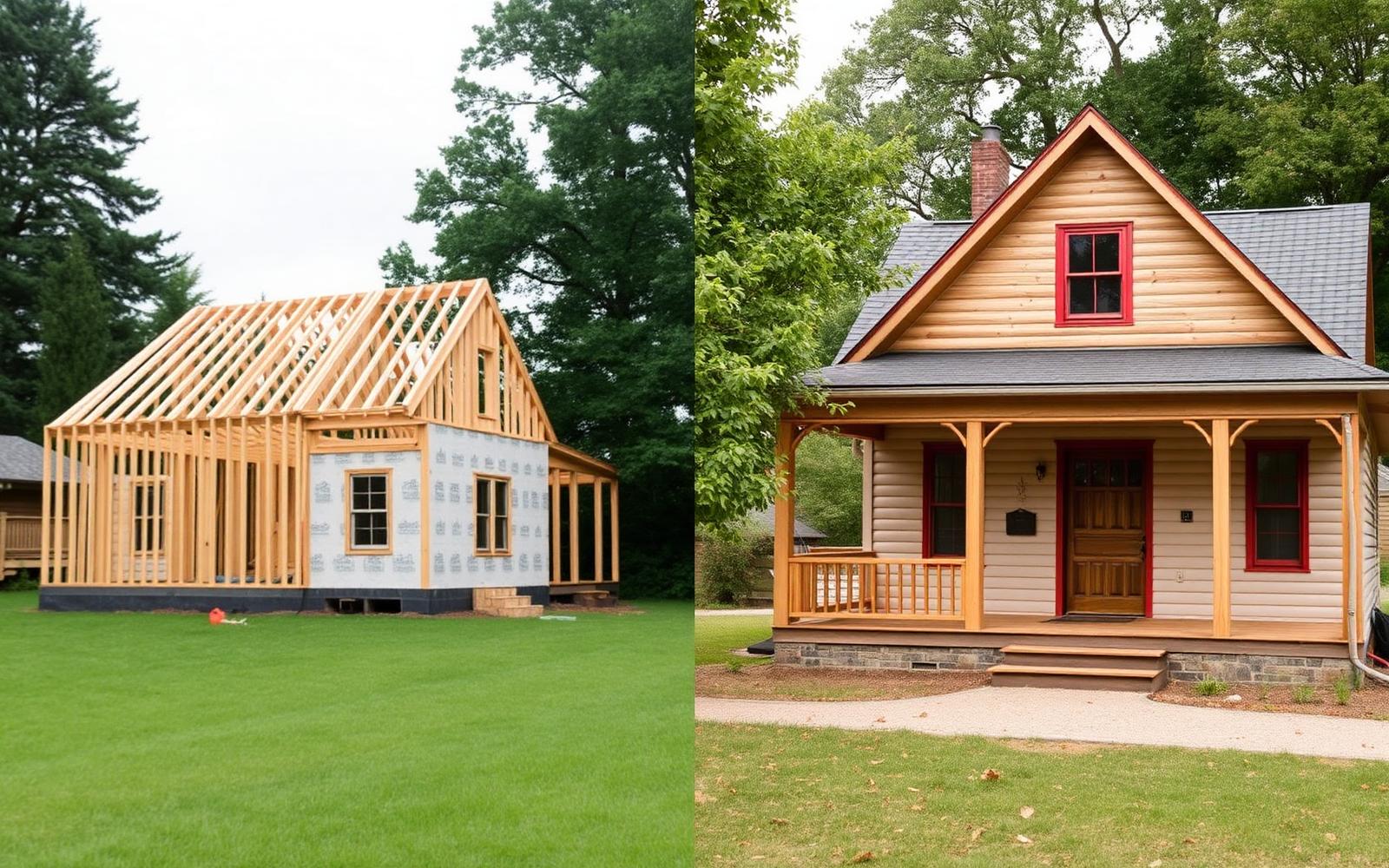
Both work. Both come with real trade-offs that don't show up in the marketing. Here's the version I give clients.
New construction: what you actually get. A warranty. Modern insulation and HVAC. Predictable maintenance for 5–10 years. Layouts designed for how people live now.
New construction: what you actually give up. Mature trees. Established neighborhoods. Character. Any negotiating leverage on price — production builders rarely move on price, but they will throw in upgrades. And a real risk of build-quality inconsistency: the same builder can produce a beautiful house on one lot and a rushed one two doors down.
Existing home: what you actually get. Location, usually. Bigger lots, usually. Real trees. A price the seller might actually negotiate. Charm you can't recreate.
Existing home: what you actually give up. Certainty. A 25-year-old HVAC. A roof that might need replacing in year three. Layouts designed for 1998. Higher maintenance cost, always.
The buying process is different too. New construction: you're negotiating with a corporate builder on a contract they wrote. Existing: you're negotiating with a person who has an emotional attachment to the house.
There's no right answer. There's a right answer for you. Write out your five-year plan first, then decide which set of trade-offs fits it.