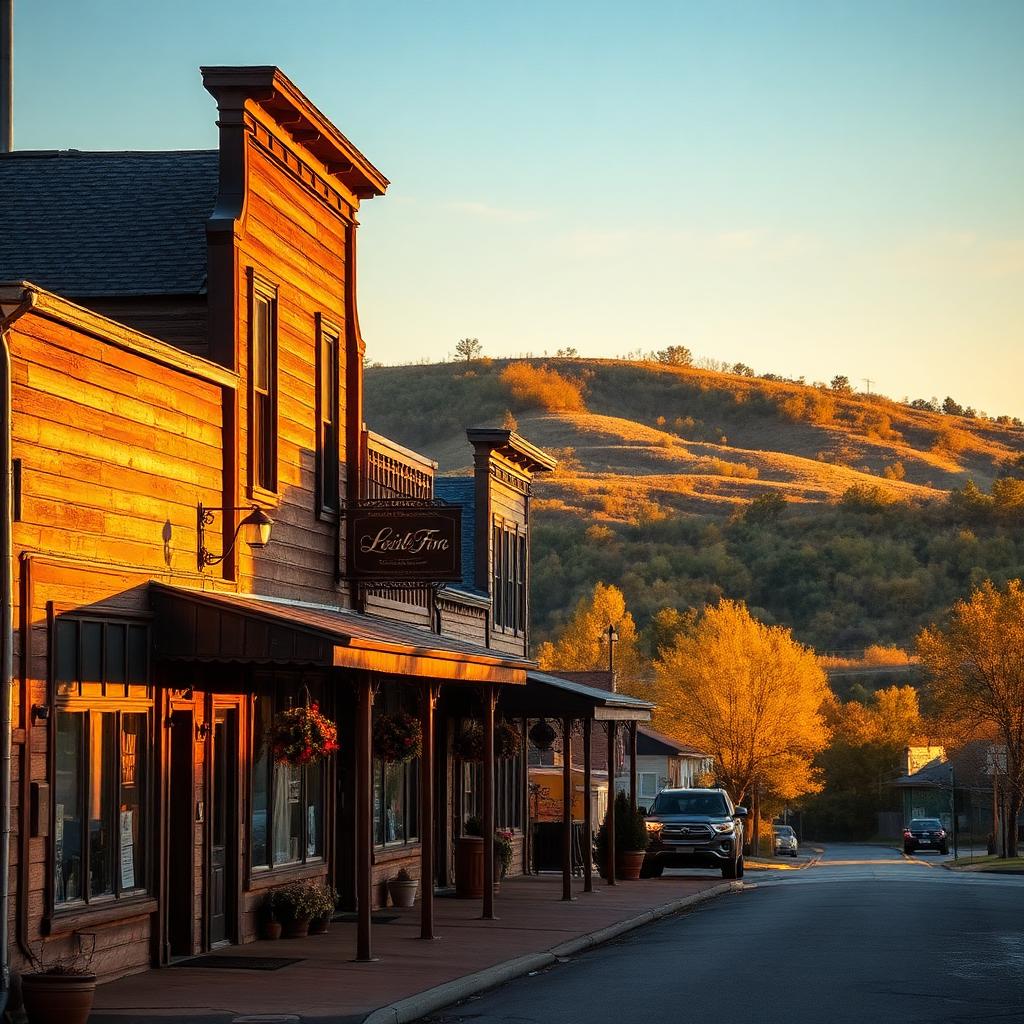
Leiper's Fork isn't a town. Legally, it's an unincorporated community in the western corner of Williamson County — a handful of buildings around a bend in the road, surrounded by some of the most valuable rural land in the American South. That contradiction is the whole story.
The name comes from a creek and a man. Hugh Leiper settled along the fork of the West Harpeth River in the late 1790s, part of the same wave of Revolutionary War veterans who took Tennessee land grants in lieu of pay. The settlement was originally called Hillsboro — a name that still appears on old maps and on Hillsboro Road, the two-lane that carries you into the village from Franklin.
For 150 years it was a farm town. Cattle, tobacco, hay, and a whiskey distillery or two. The Natchez Trace ran nearby; the railroad never did. That accident of geography is what saved it. Towns the railroad found got warehouses and grain elevators. Towns it missed kept their storefronts, their creek bottoms, and their scale.
Then the musicians moved in. Beginning in the 1980s and accelerating through the 1990s, Nashville songwriters and studio players discovered that 30 minutes south of Music Row you could buy 50 acres, a barn, and quiet. Marty Stuart, Justin Timberlake, and Rodney Crowell all became part of the fabric. Puckett's Grocery, the general store at the center of the village, quietly turned into one of the best small live-music venues in the country.
The art followed the music. The David Arms Gallery, the Copper Fox, and a rotating cast of studios turned the village into a weekend destination without ever building a stoplight. Fox & Locke, the current music room where Puckett's used to be, still draws Grammy winners on a Wednesday night.
What it costs now. A modest home in the immediate village core lists in the $1.2M–$2M range. Estate parcels of 20–50 acres regularly clear $4M–$10M. Green Door Gourmet and the horse farms along Old Hillsboro Road anchor a real estate market that behaves more like Aspen or the Hamptons than rural Tennessee — scarce inventory, cash buyers, and a waiting list at the top.
Why it holds value. Leiper's Fork can't get bigger. The village is bounded by watersheds, conservation easements, and a Williamson County zoning code that treats the character of Old Hillsboro Road as a public trust. There is no path to a subdivision on Southall Road. That legal scarcity is what makes the land here appreciate the way it does.
If you're thinking about buying in Leiper's Fork — or you already own here and want to know what your parcel is worth — I know this pocket of Williamson County intimately. Call or text me at 310-872-8731.