Almost every buyer moving here from California, Illinois, or the Northeast asks the same question in the first ten minutes: what are the property taxes? The honest answer is that Tennessee's are low by national standards, but the way they're calculated confuses people, and the number you see quoted online is usually only half the bill.
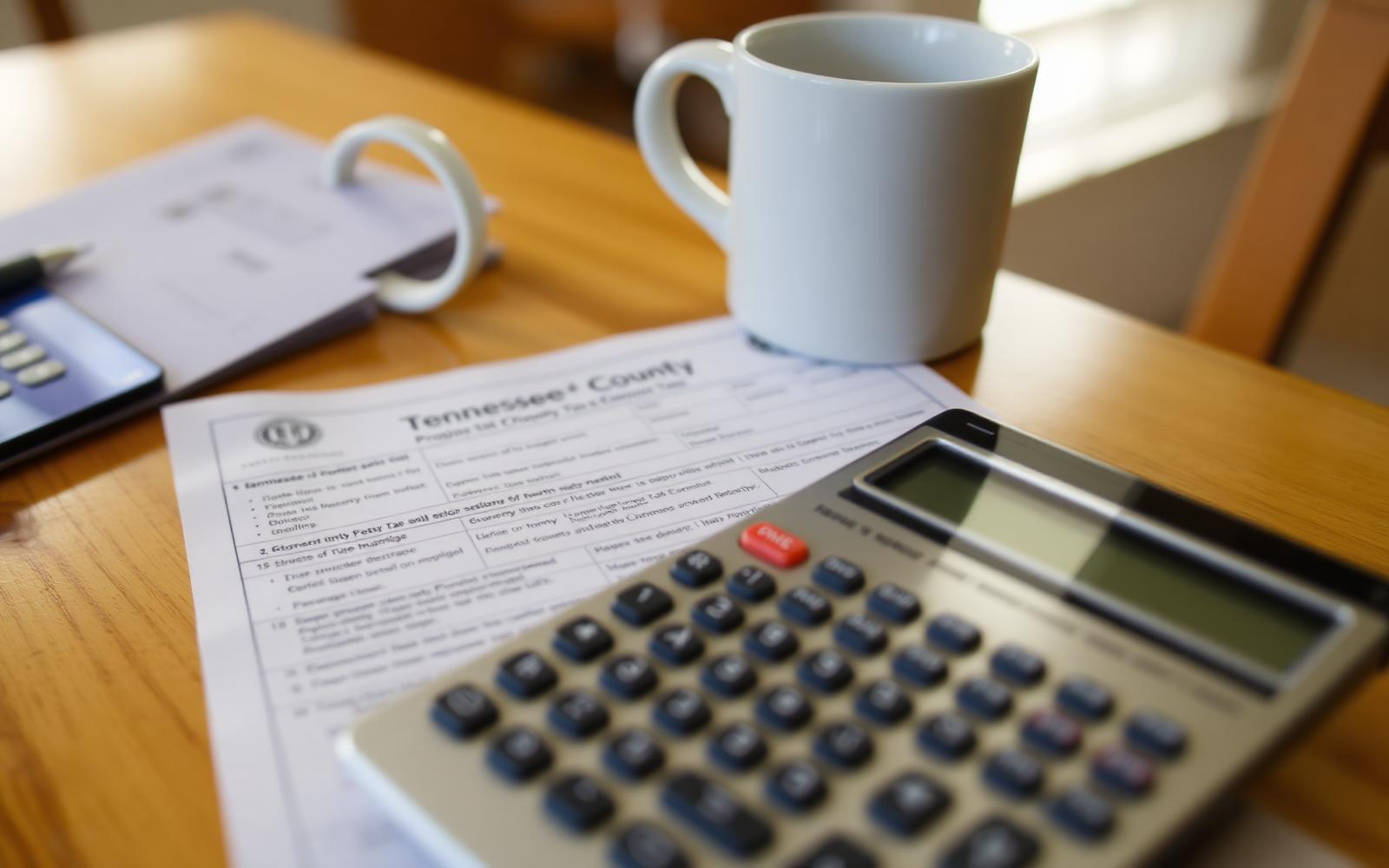
The formula. Tennessee doesn't tax your full market value. Residential property is assessed at 25% of appraised value. Commercial is 40%. Farm and open-space land under greenbelt is valued on present use, not what a developer would pay. So the math is: appraised value × 25% = assessed value, then assessed value ÷ 100 × the tax rate.
A real example. Williamson County's 2025 county rate is $1.30 per $100 of assessed value. On a $600,000 home, that's $600,000 × 25% = $150,000 assessed, then $150,000 ÷ 100 × $1.30 = $1,950 to the county. That's the number that makes people from high-tax states do a double take.
Then the city rate stacks on top. If the house sits inside Franklin, Brentwood, Spring Hill, Columbia, or any incorporated city, you pay a municipal rate in addition to the county rate. If it sits in the unincorporated county — which is where most acreage is — you pay only the county rate. This is the single biggest reason two homes at the same price on opposite sides of a city limit line have different tax bills. Always check which side of the line you're on before you assume.
Reappraisal cycles matter more than rate changes. Tennessee counties reappraise on a four-, five-, or six-year cycle. When values jump, the state requires a certified tax rate that's revenue-neutral, so the rate usually drops to offset the new values. That's why Williamson's county rate went from $1.87 in 2024 to $1.30 in 2025 after reappraisal — the rate fell, but assessed values rose. Your bill did not necessarily fall by 30%. Look at the actual dollar amount on last year's bill, not the rate.
Where to get the real number before you write an offer. Every county assessor in Tennessee publishes a searchable property record online, and every county trustee publishes what was actually paid. Pull both. Don't take the number in the MLS listing at face value — it's often last year's bill, and if the seller had a greenbelt, veteran, or elderly/disabled freeze in place, your bill as a new owner can be dramatically higher.
The traps I watch buyers fall into. One: buying land in greenbelt and not realizing the rollback tax comes due if you take it out of agricultural use. Two: buying new construction where the current bill reflects a vacant lot, not a finished house — your second-year bill can triple. Three: annexation. A parcel just outside a city today can be inside it in a few years, and the city rate comes with it.
What it still adds up to. Even after the city rate, Middle Tennessee property taxes generally land well below what people pay in the states they're leaving, and there's no state income tax on wages to go with it. But the sales tax is high — 7% state plus local, commonly 9.25% to 9.75% total — so your total tax picture depends on how much you spend, not just what you own.
If you want, send me the address of anything you're considering and I'll pull the actual assessment, the current rate, and what the bill will look like in your first full year of ownership. It takes me about ten minutes and it has changed more than a few offers.